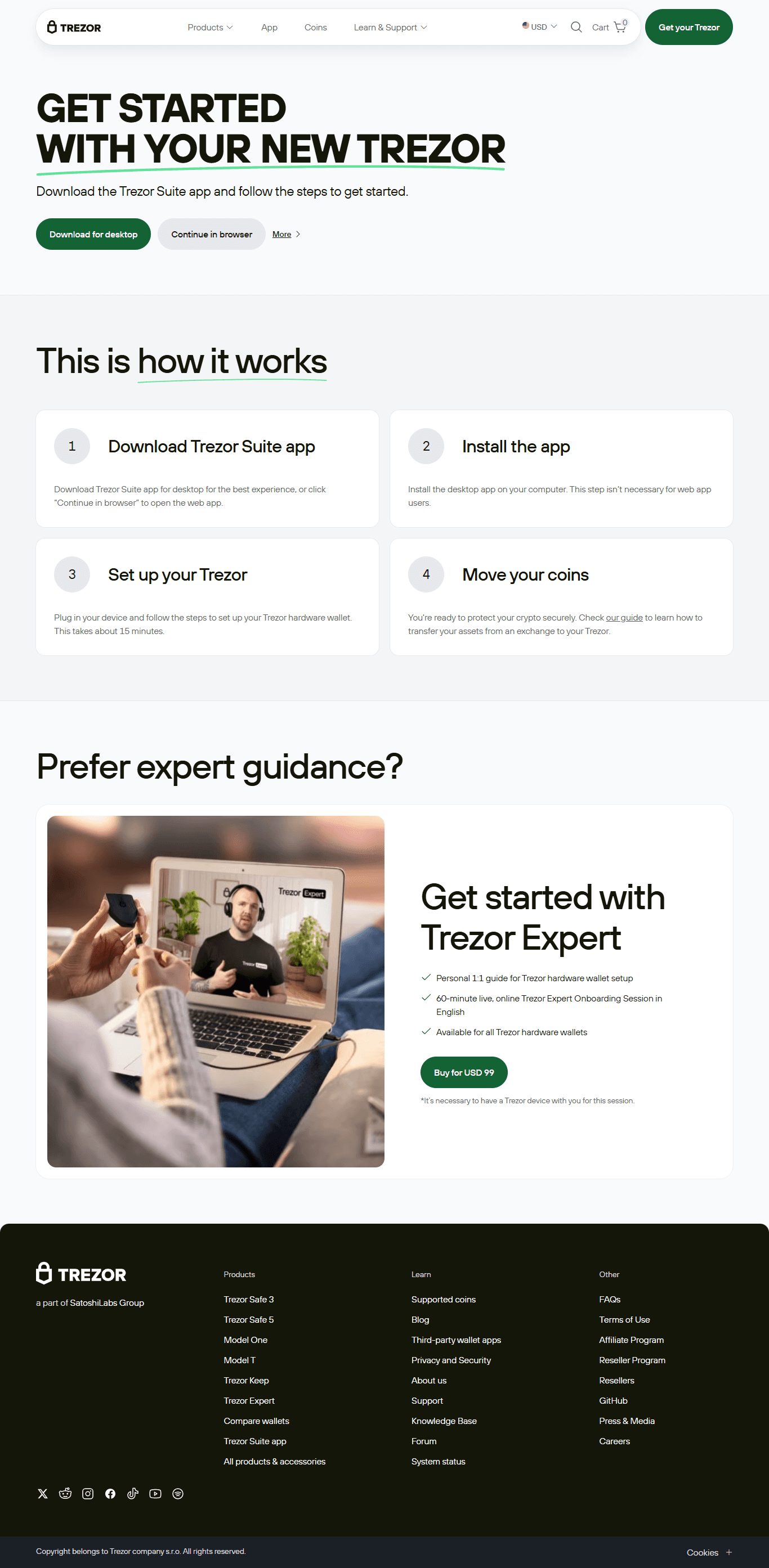
Trezor Suite — A Clear, Practical Guide
Trezor Suite is the desktop and web application designed to manage hardware-wallet-held cryptocurrencies with clarity and safety. It acts as the user interface for Trezor hardware devices, translating secure, offline key storage into everyday actions: sending and receiving coins, checking portfolio value, managing accounts, and connecting to services — all while keeping private keys guarded by the hardware device. This overview explains what Suite does, how it protects your keys, where it excels, and practical tips for an efficient, secure workflow.
What Trezor Suite Provides
At its core, Suite is the bridge between your computer and the Trezor device. It shows balances and transaction history, constructs transactions for you to sign on the device, and offers simple account management for many blockchains. Beyond basic wallet functions, Suite includes features such as portfolio tracking, fiat-conversion price displays, an address book for frequent recipients, and an integrated exchange/coin-swap interface (provided by partners). The design focuses on removing complexity: Suite simplifies multi-account views, separate coin accounts, and change addresses so users can manage a diverse crypto portfolio without needing command-line tools.
Security Model — Why It’s Safer
The security advantage of Trezor Suite comes from hardware-backed key isolation. Private keys never leave the Trezor device. When you create or sign a transaction, Suite prepares the unsigned transaction and sends it to the hardware device; the device displays a human-readable summary of the transaction and requires a physical confirmation (pressing a button) before returning the signature. This hardware signing prevents malware on the host computer from extracting keys or silently altering instructions. Suite itself is designed to minimize attack surface, verify device firmware versions, and warn the user if the connected device appears tampered with or running unsigned firmware.
Getting Started — Practical Steps
Setup begins with an unboxing, connecting the device, and following Suite’s onboarding flow. Suite guides users to create a new wallet or recover using a mnemonic seed. During setup, the device generates the seed inside the device; Suite never prints or stores the full seed digitally. Writing the seed down on paper (or a steel backup) and storing it securely is emphasized. Suite also supports setting a passphrase for extra security (a hidden wallet feature) — powerful but requiring careful backup discipline because a forgotten passphrase cannot be recovered.
Day-to-Day Use
For routine use, open Trezor Suite, connect your device, and authenticate by physically approving actions on the Trezor. Sending a transaction shows fees, recipient address, and amounts inside Suite and again on the device screen for confirmation. Suite makes receiving funds simple by providing QR codes and deterministic receive addresses. Portfolio and price views let you monitor holdings at a glance. If you use multiple coins, Suite allows switching accounts and viewing each asset’s history separately. For recurring tasks, the address book saves verified addresses so you don’t re-enter long strings.
Advanced Features
Suite supports advanced options for users who want more control. Coin-specific settings may include custom fee selection, transaction labeling, and support for connecting to custom nodes for some blockchains. The passphrase feature creates an additional hidden wallet layer, effectively multiplying the number of wallets a single device can host. Developers and power users can pair Suite with third-party applications using the device as a signer; this preserves the security model while enabling integrations like DeFi dashboards or multi-sig setups. Suite also periodically checks firmware and prompts upgrades when a new, signed firmware release is available.
Common Pitfalls & How to Avoid Them
Users sometimes trip over passphrase management, backups, and phishing risks. Treat the 24-word seed and any passphrase as gold: write them down on durable material and store them off-line in physically secure locations. If you enable a passphrase, record it in a secure place—losing it means losing access. Be cautious of fake Suite websites or phishing emails; always start Suite from its official application and verify download checksums where available. Never enter your seed or recovery words into a website or software; the only place to input the full seed should be the device during recovery.
Performance & Compatibility
Suite works across major desktop platforms and is tuned to be responsive even with large histories. Compatibility covers a wide range of coins and tokens, and Trezor publishes a compatibility list for details. Suite’s design hides unnecessary complexity while surfacing relevant coin-specific choices when needed. When using less-common chains, check whether Suite or a compatible third-party app supports that asset before transferring funds.
Practical Tips for Everyday Safety
- Keep firmware updated using Suite’s updater — only install firmware signed by the manufacturer.
- Use a separate, secure location for your seed backup and consider a secondary, geographically separate backup.
- Prefer USB connections to unknown public computers; if you need to use a shared system, consider verifying critical balances from another device first.
- Label accounts and transactions inside Suite to make audits and bookkeeping simpler later.
When to Use Trezor Suite vs. Third-Party Wallets
Use Suite when you want a supported, integrated interface that emphasizes hardware-backed security and a clean user experience. Third-party wallets might be appropriate for specialized features, experimental blockchains, or custom node connections not offered in Suite; in those cases, keep using the Trezor device as the signer so the private keys remain isolated. Always verify compatibility and security properties before combining tools.
Final Thoughts
Trezor Suite converts the strong safety guarantees of a hardware wallet into a usable, everyday interface. It reduces friction for common tasks while preserving the bedrock principle: private keys stay on the device. For most users this combination delivers a compelling balance of security and convenience. Whether you’re taking your first steps with self-custody or managing a diversified crypto portfolio, Suite’s deliberate confirmations, backup guidance, and straightforward account management make it a dependable control center for private-key-based asset ownership.
— concise overview for secure management with Trezor Suite. Keep backups safe, confirm actions on your device, and treat passphrases with care.